
Yogic Arts Academy 50h Teacher Training with Duncan Wong

Yogaskolen is proud to host Duncan Wong and his Yogic Arts Academy 50h Teacher Training in Oslo, June 21st until June 28th 2027 . For eight days, you practice in the morning and train as a teacher in the afternoon. Each day has one theme, and you leave with a practice plan you can use for your own practice or for your classes.
Daily schedule
10:00 to 12:00: Morning flow
12:00 to 14:00: Break
14:00 to 18:00: Teacher training
We are located in Møllergata 9, with many shops and cafes nearby, but we also have a small refrigerator for those who want to bring lunch.
8 days at a glance
21 June: Mantra and chant
22 June: Breath (prana)
23 June: Core (bandha)
24 June: Hands and feet (mudra)
25 June: Alignment (asana)
26 June: Transitions (vinyasa)
27 June: Sequencing (hug)
28 June: Assists and cues
General information
Place: Møllergata 9, Oslo
Dates: 21-28 June 2027
Hours: 10:00 - 18:00 all days
Language: This immersion is in English.
Questions about course content: Contact Duncan Wong at [email protected] or i nstagram: @yogicartsacademy
Cancellation - NEEDS TO BE UPDATED
We look forward to welcoming you to this weekend course. At the same time, we understand that plans can change, and here is our cancellation policy:
- Cancellation before February 28, 2027
You will receive a full refund of the course fee, with the exception of a deposit of NOK 1,000. - Cancellation after February 28, 2027
Registration is binding and the course fee is non-refundable. However, it is possible to transfer your place to another participant.
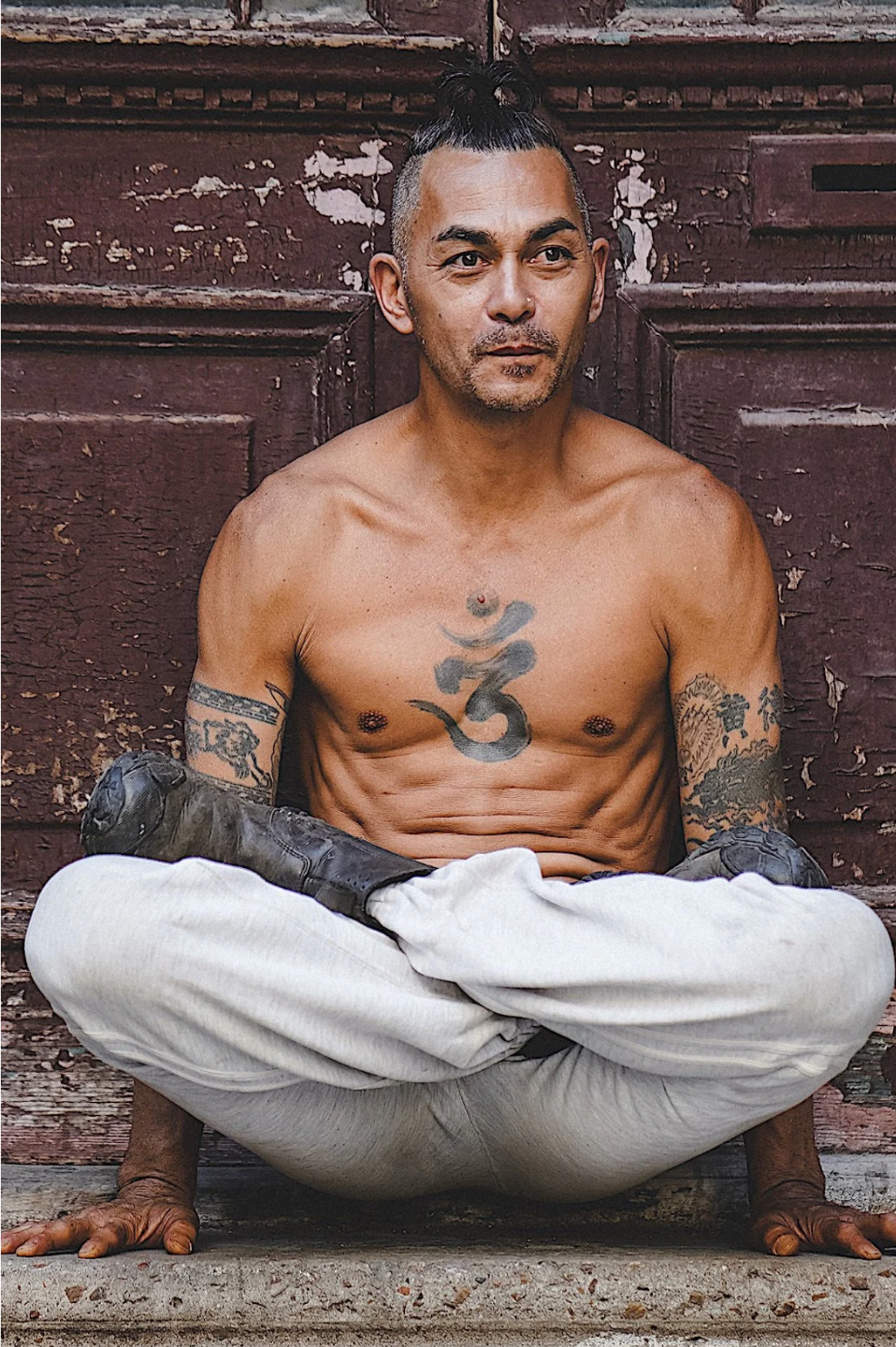
The teacher: Duncan Wong
Duncan Wong is a vinyasa yoga teacher and the founder of the Yogic Arts system and Warrior Flow yoga.
He devoted his twenties to a Buddhist warrior-monk and lived in his temple dojo training for a decade. During that time he trained extensively in the art of Ashtanga Vinyasa yoga under the premier Western masters; a practice that led him to India, New York, Europe, Asia, and ultimately an extensive 20 year world tour. In 1995, he became the first man on the cover of Yoga Journal.
After more than 20 years of teaching around the world, he now runs retreats from his home in Kyoto, with a focus on injury prevention and helping yogis and athletes keep practicing as they get older.
Course description by Duncan Wong, Yogic Arts Academy
Each day, the morning practice and the afternoon training will have the same theme, and will always include a strong morning flow practice and a gentle, slow flow review and breakdown in the afternoon teacher training time.
The course target objective will be to utilize the eight points or principles of the Yogic Arts method, to have a master practice plan to work from. This will serve as a class curriculum for either a self practice, or as a teaching plan.
This training is designed for practitioners and practicing teachers, looking to deepen their understanding of their breath, mind, and energy, as a unified body map system.
These ancient lost art yogic teachings, as presented in a modern day format, reveal the nature of our own design, and how to optimize our power and potential.
This course and class approach will help us to level up our practicing and teaching skill set, which in many ways are both sides of the same experience, as we ourselves are always teaching by our example.
The build-up of the days
Day 01: Mantra / Chant (21.06.2027)
Mantra not only protects and fine tunes our conscious mind, but also equally activates our yogic breath and bandha, thus activating our body's core source-power, via body heat, hydration, circulation, and energetic flow.
These teachings and insights will be reflected in the practice, which will be infused with ancient powerful mantras that also teach us more about ourselves, and the traditional ways of the original yogis.
Day 02: Prana / Breath (22.06.2027)
Developing our prana power through the application of traditional pranayamas, we not only generate balance, strength, and vital energy, but in the process, we learn what each breathing technique's effect is designed to produce.
Prana as refined breath on the out-take direction attracts our muscle contraction, experienced as true energetic power. In equal measure, known as sama vritti pranayama, or equal force breath, the intake direction affords the expansive, spacious and regenerative 'bigger' energy, which invokes our natural greatness.
Vinyasa, or flow, is therefore a resonant rhythm system, which we can use to control the desired type of practice or class energy effect.
Day 03: Bandha Flow (23.06.2027)
The way of bandha (core) intrinsically relies on the quality of the prana (breath). This teaches us that the 08 principle points naturally follow the pattern of yoga chikitsa (unified therapy), which is to say that each point, technique, asana (posture), and of course breath direction, prepares the body for the next experience.
To give an example, placing a block high up between the thighs in a downward dog pose, while practicing uddiyana bandha kumbhaka and prana (abdominal lift, retention, and conscious yogic breath), will fast track the difficult awareness and mastery of true bandha in action. This, and several more approaches, will be presented in the course.
Day 04: Mudra / Structure (24.06.2027)
Mudra in this course context will primarily explore the physically empowering, practice friendly hand structures, with several vital foot structures to support stance power, and even kicking and striking mudras.
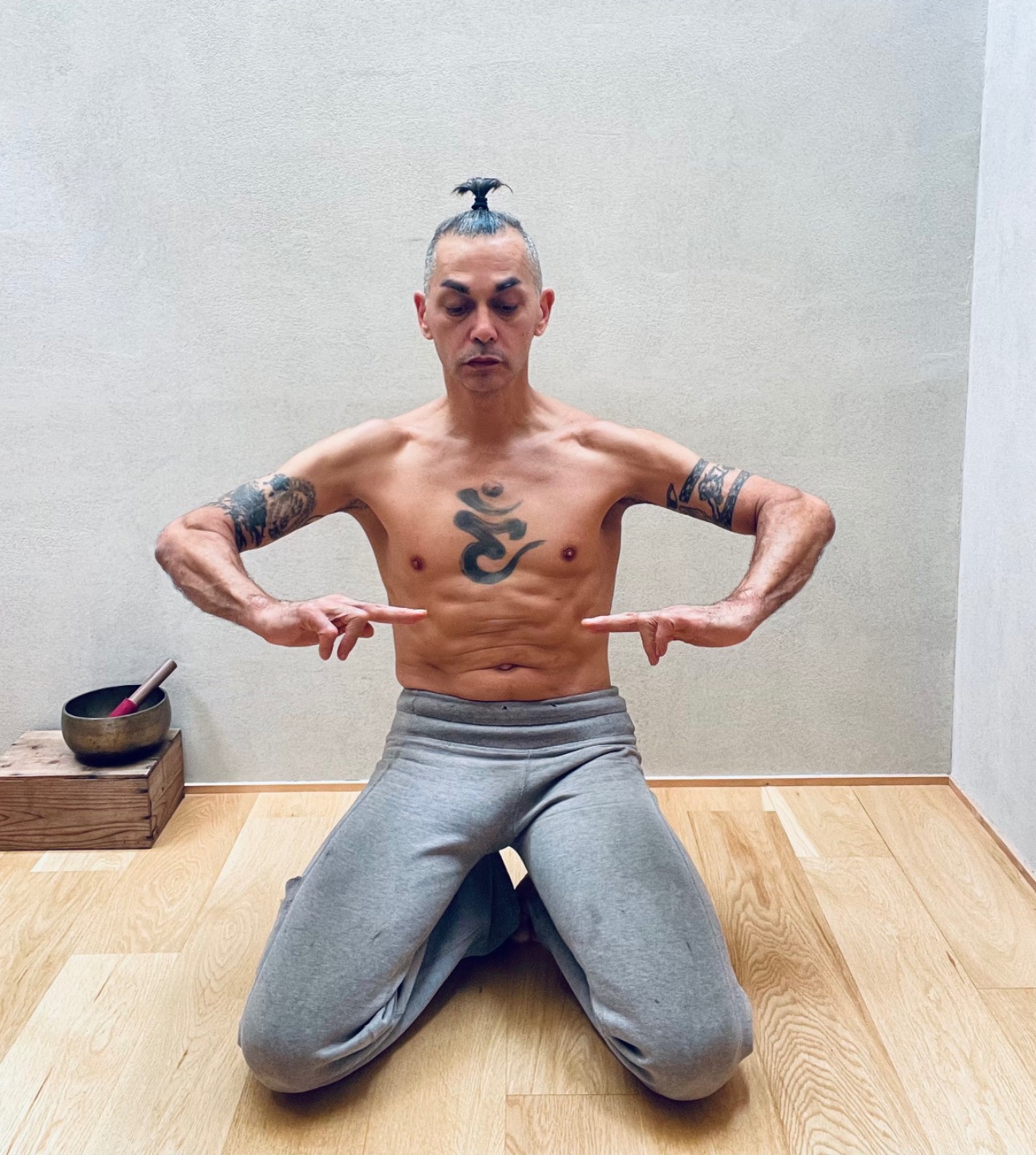
That said, we will also address the few necessary internal mudras that support the 'maha bandha', or great core foundation, comprised of our pelvic, abdominal, ribcage, supported tongue, and elimination micro muscles.
Day 05: Asana / Alignment (25.06.2027)
Here is another great chance to observe yoga chikitsa (structural therapy) in action. All postural alignment starts with prana-bandha (breathe and squeeze) to align the configured bones (joint-postural alignment).
Most yogis have a general grasp of this. Yet an often lost application of true power (structural load) exists within the position, distribution, and subtle activation of the hands and feet. This is certainly true of hand press poses, and all standing postures. Above all, our hand and foot placement is the foundational root system of all activated alignment points.
Day 06: Vinyasa / Flow (26.06.2027)
Vinyasa is classically defined as a linking mechanism, literally transliterated as a conscious placement. Here we explore the transitional movements that connect the postures, which form our effective flow sequence.
You will confidently be able to say that you understand Vinyasa Chikitsa (poses and their connecting movements placed in such a way as to have prepared the body to land into the next position). We will explore classical vs innovative short transitions to juice up your game!
Day 07: Hug / Sequence (27.06.2027)
Krama, sometimes referred to as 'in-between-places', literally refers to a vinyasa codex. Here we will take brief deep dives into short and smart choreographed flow sets, with the goal of linking them together to create a healthy and inspiring practice or class.
As in practice, an inclusive flow class should possess both a modified and an intensified asana and vinyasa option, whenever possible and applicable. This point, which also serves to meet us on any given day, whether for a restorative or dynamic practice time, will be addressed in a comprehensive way.
Day 08: Yojanam / Assist (28.06.2027)
Assists, adjustments, subtle guiding points, verbal cues, and voice projection coaching (a carry over teaching point from Day 01 Mantra work) will all be demonstrated and presented through detailed explanation and interactive, comprehensive, step-by-step, hands-on mechanical breakdown instruction.
This method has a very useful 04-Point approach to adjustments:
Base Point: Ground
Support Point: Stack
Adjust Point: Action
Rocking Point: Empowerment
Would you like to get in touch?
Fill out the form and we will contact you as soon as possible. You can also send us an email at: [email protected]
🧘🏽